Contact lens guides
How to Read Your Contact Lens Prescription
Understand the common labels on a contact lens prescription and what your clinic needs to confirm before a supply request.
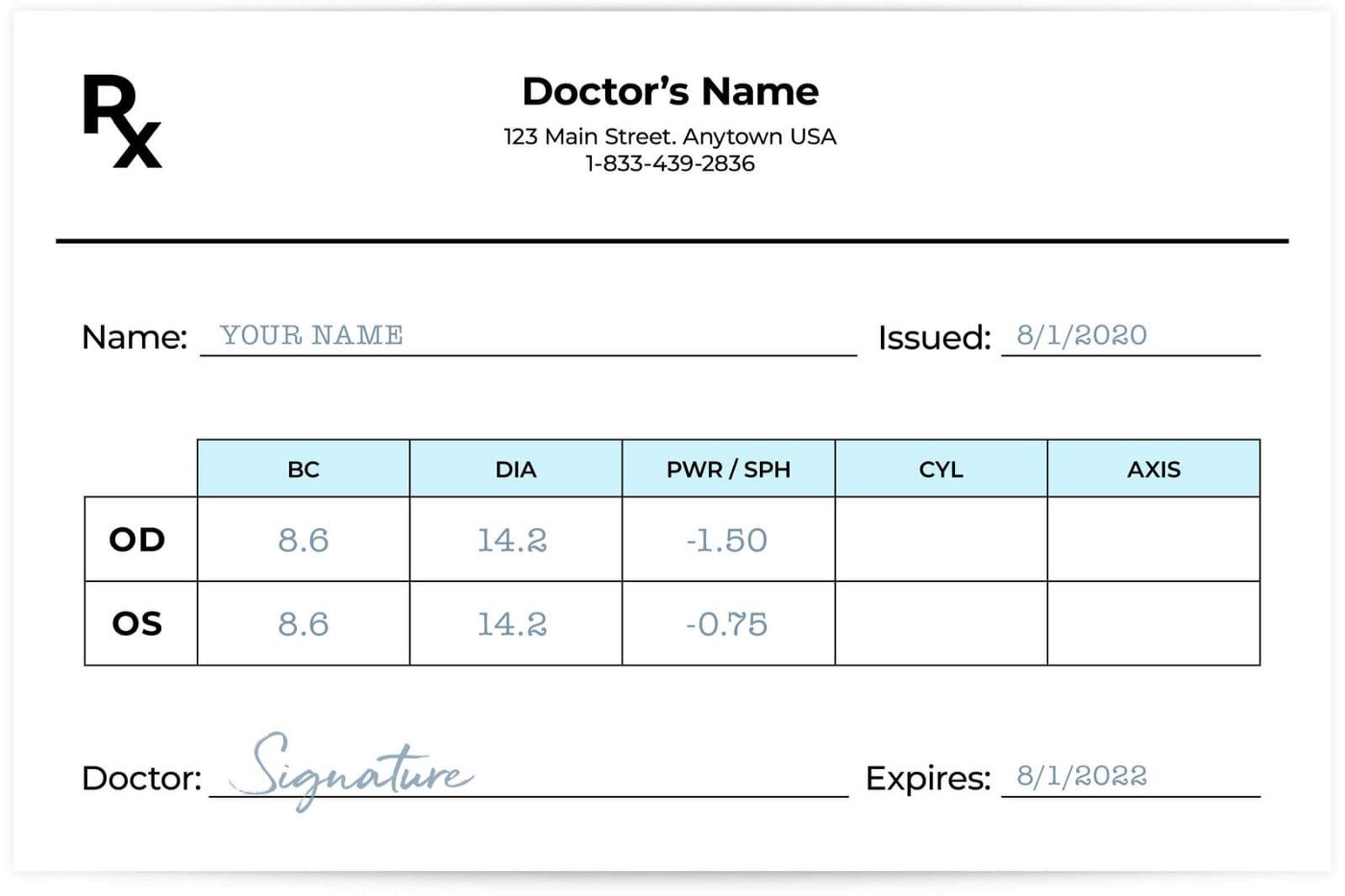
A contact lens prescription is specific to the fitted lens
A glasses prescription alone does not identify the right contact lens. The lens design, fit and wearing instructions also matter. Keep the prescription supplied after your fitting and ask your clinician to explain any unfamiliar entries.
Common prescription labels
- Right and left: often shown as R and L, or OD and OS. Keep each eye’s details separate.
- SPH or power: the spherical lens power, expressed in dioptres. The plus or minus sign is part of the prescription.
- CYL and AXIS: entries used for astigmatism correction when a toric lens is prescribed.
- ADD: an additional near-vision value used with some multifocal designs.
- BC: the base curve or the manufacturer’s designation for the fitted lens.
- DIA: the lens diameter, where specified.
- Brand or lens design: identifies the lens selected during the fitting.
Not every prescription contains every field. The available combinations also depend on the manufacturer and lens design. Do not substitute another lens simply because its power appears to match.
What to confirm before ordering
Check the patient’s right and left lens details, the exact product, pack size and replacement schedule. For made-to-order lenses, confirm all required fitting parameters with the prescribing professional before requesting a quotation.
Clinics and optical shops can [contact EAGLE EYE](/contact) to check product availability. We will confirm the supplied product and pack configuration; clinical changes to a prescription should be made by the prescribing eye care professional.
Further reading
[FDA: Buying contact lenses](https://www.fda.gov/medical-devices/contact-lenses/buying-contact-lenses)